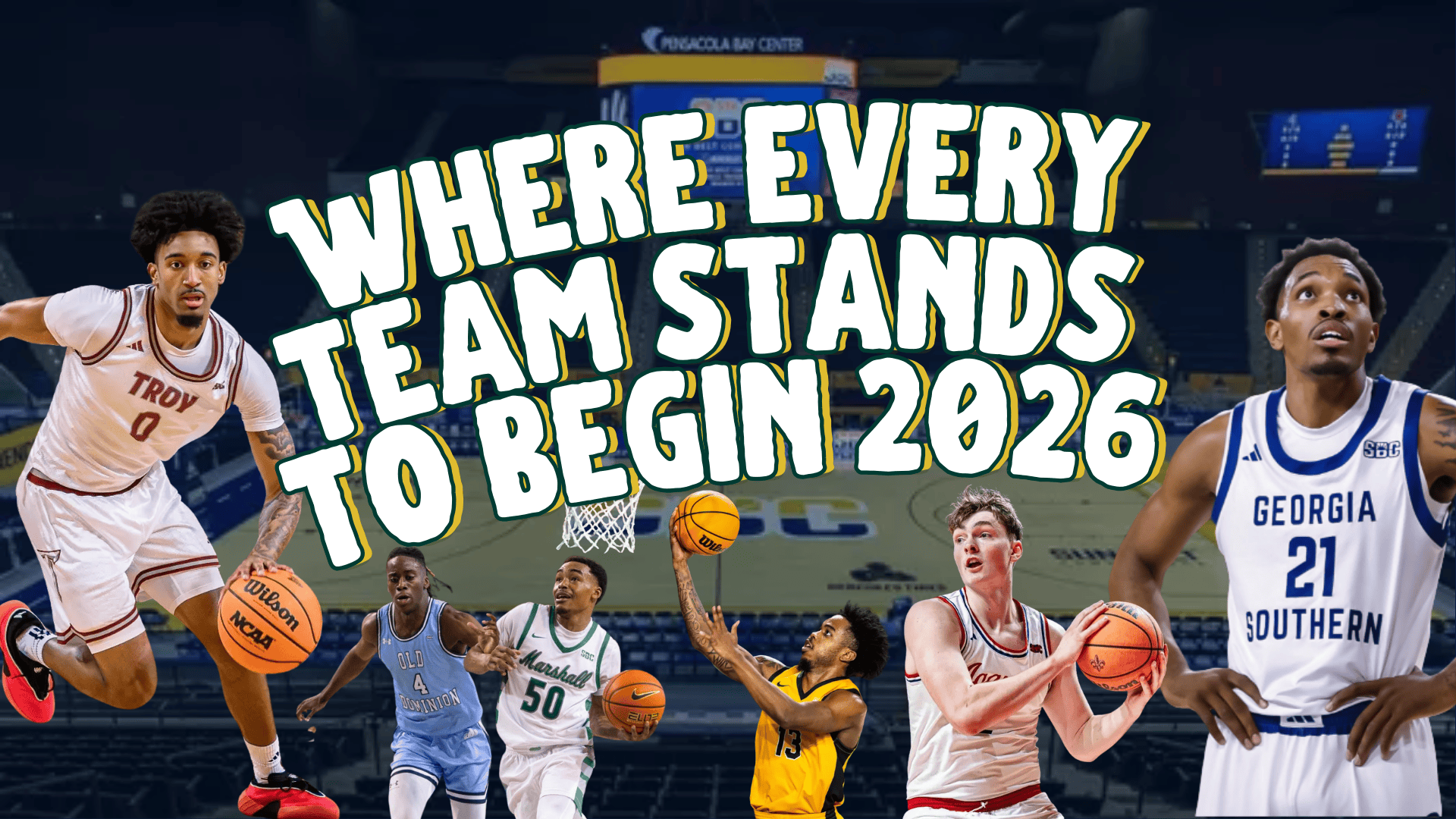
Sun Belt men's basketball heading into 2026
Conference play has already begun in Sun Belt men’s basketball, and as the calendar turns to 2026, the conference is slowly starting to take shape. Some teams have begun to separate themselves, preseason favorites are struggling, and the middle of the conference appears extremely tight. With two months left in the 2025-26 season, here is where every team in the Sun Belt currently stands.
Georgia Southern
The Eagles currently sit at 11-5 overall and 3-0 in conference play, the best mark in the Sun Belt. Georgia Southern is also riding an eight-game winning streak, the longest of the Charlie Henry era, highlighted by overtime wins against James Madison and Coastal Carolina. Transfer Spudd Webb has been a major surprise for the Eagles, averaging nearly 17 points per game, which ranks third in the conference.
While the offense is clicking at 83.9 points per game, defense is the area that needs the most improvement. Georgia Southern allows the second-most points per game in the conference. Rebounding has also been an issue, as the Eagles give up nearly 14 offensive rebounds per game and allow the most total rebounds in the Sun Belt. Georgia Southern is already a dangerous team, but improvement in those areas could make it even more formidable entering March.
Arkansas State
Arkansas State enters 2026 near the top of the Sun Belt standings with a strong non-conference resume and an undefeated start to conference play. Under first-year head coach Ryan Pannone, the Red Wolves are averaging nearly 84 points per game through 14 contests and rank first in the conference in offensive rating, according to KenPom. Six players are averaging double figures, highlighting the team’s balance.
To maintain its success as conference play deepens, Arkansas State must improve defensively, as it ranks near the bottom of the league in points allowed per game. The Red Wolves also need to limit turnovers, averaging more than 14 per game.
Troy
The Trojans were looking to build off an NCAA Tournament appearance, and through the first two months, that is exactly what they have done. Despite losing four starters from last season, Troy sits near the top of the conference entering January. The Trojans took a ranked USC team to triple overtime and earned non-conference road wins against Kent State and San Diego State. Returners Victor Valdes and Thomas Dowd have been outstanding, with Valdes ranking second in the conference in scoring and Dowd averaging a double-double.
Like Georgia Southern, Troy must improve defensively. The Trojans average nearly 90 points per game, the best mark in the conference by a wide margin, but sit near the bottom in points allowed. Under Scott Cross, defense has traditionally been a strength, and returning to that level could put Troy back in the NCAA Tournament picture.
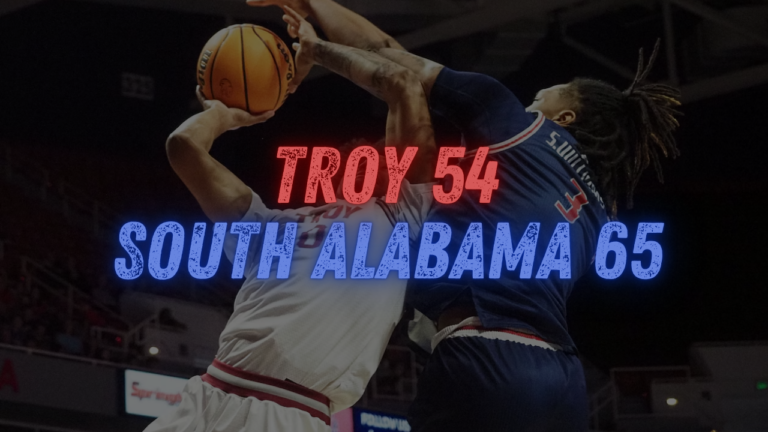
South Alabama
South Alabama sits in the top four of the Sun Belt despite, in typical Richie Riley fashion, not adding a Division I transfer in the offseason. The Jaguars opened the season on a six-game winning streak, including road victories against Jacksonville State and Toledo. Adam Olsen and Chaze Harris have been key additions, each averaging nearly 17 points per game. However, Peyton Law — who scored 29 points and grabbed nine rebounds earlier this season — is out for the year. Since his injury, South Alabama is 3-2.
Statistically, the Jaguars are strong in most areas. They rank third in the conference in point differential and shoot a league-high nine percentage points better from the field than their opponents. Their biggest issue has been fouling, committing a conference-worst 5.8 more fouls per game than opponents.
App State
App State has had an interesting start to the season but remains in the top half of the conference. The Mountaineers have suffered blowout losses to Elon, Central Michigan and Ohio State, but also own significant wins against High Point and East Carolina. USF transfer Kasen Jennings has been crucial, leading the team in scoring, while returner Luke Wilson has taken a major step forward. App State also ranks well statistically, outscoring opponents by 7.5 points per game and leading the league in opponent points per game.
If App State wants to compete with the conference’s top teams, improvement at the free-throw line is necessary. The Mountaineers are shooting just 60.9 percent from the line, a number that could prove costly in close Sun Belt games.
Southern Miss
Southern Miss has endured an up-and-down season. The Golden Eagles began 1-3, including losses to Buffalo and Grambling State, but have since gone 7-4 with wins over UT Martin and Radford, along with a close loss to Ole Miss. Guard Isaac Tavares got off to a strong start and appeared headed for an all-conference season before an injury derailed his momentum. Since then, Tylik Weeks has emerged, leading the conference in scoring. Southern Miss has also rebounded well, out-rebounding opponents by more than five per game.
Consistency remains the key. At times, the Golden Eagles look like a top contender; at others, they resemble a bottom-tier team. Turnovers are also an issue, as they average nearly 13 per game. If those problems persist, pressure could mount on Jay Ladner.
Marshall
Marshall currently sits seventh in the conference, though its overall record suggests it may be better than its standing. The Thundering Herd’s non-conference schedule was uneven, with losses to Lipscomb, UNCW and Ohio, but wins against Toledo, Elon and Western Kentucky. Seniors Jalen Speer and Wyatt Fricks lead the team, each averaging just under 15 points per game. Freshman Landen Joseph has been a pleasant surprise, providing energy and guard depth, while 7-foot-4 Matt Van Kommen anchors the interior.
Like Southern Miss, Marshall must find consistency and reduce turnovers. Its 13.6 turnovers per game rank third-worst in the conference. If those issues improve, the Herd could be a difficult out in conference play.
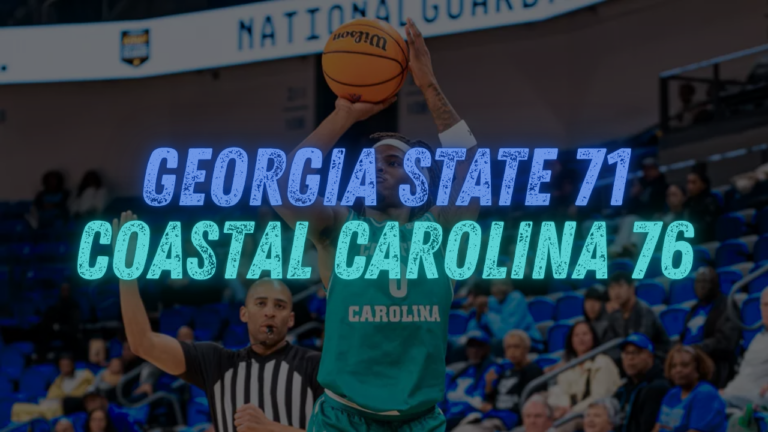
Coastal Carolina
Picked 13th in the preseason poll, Coastal Carolina has exceeded expectations. The Chanticleers earned two wins against a Winthrop team highly regarded by analytics and secured a road victory against Saint Joseph’s. Guards Joshua Beadle, A.J. Dancler and RaSheed Jones each average more than 14 points per game, forming one of the top guard trios in mid-major basketball. Defensively, Coastal ranks first in the Sun Belt and 118th nationally, according to KenPom.
Despite clear progress in Year 2 under Justin Gray, improvement is still needed. The Chanticleers average 73.3 points per game, ranking in the bottom four of the conference. Finding a consistent fourth scoring option will be critical down the stretch.
Texas State
Texas State is the final Sun Belt team with a winning record, sitting at 8-7 but trending downward after winning just two of its last seven games. The Bobcats own quality wins against South Alabama and UTSA but have suffered blowout losses to Bowling Green, Seattle and Troy. Defense has been a strength, as Texas State allows 70.5 points per game and forces more than 14 turnovers per contest.
With its future in the Sun Belt nearing an end, Texas State must find offensive consistency. The Bobcats average 74.1 points per game and commit 13.9 turnovers, limiting the impact of their defense.
Georgia State
Georgia State has struggled, as many expected, sitting at 4-11 overall. The Panthers have shown improvement recently, winning three of their last five games and narrowly losing at Marshall. Availability has been a major issue, with Jelani Hamilton, Jakai Newton, Trey Scott and Clash Peters all missing time. Freshman Micah Tucker has been a bright spot, averaging 12.7 points per game and emerging as a Freshman of the Year candidate.
Offense remains the primary concern. Georgia State ranks 340th in offensive rating, according to KenPom, and sits at the bottom of the conference in both field-goal and 3-point percentage. Continued struggles could lead to major changes.
Old Dominion
One of the biggest disappointments in the Sun Belt has been Old Dominion. After a promising first season under Mike Jones, the Monarchs are 4-11 and winless on the road. Preseason Player of the Year Robert Davis Jr. has struggled, averaging fewer than 10 points per game. Old Dominion ranks near the bottom of the conference despite a talented roster.
If the Monarchs want to rebound in conference play, improved production from their top players will be essential.
Louisiana
In Year 1 under coach Quannas White, Louisiana has struggled, sitting at 3-12 overall. The injury to point guard Jamyron Keller proved costly, and the lack of a traditional big man has hurt the Cajuns. Guard Dorian Finister leads the team in rebounding at five per game, while Louisiana is being out-rebounded by 3.5 per contest. The Cajuns also rank last in the conference in point differential.
James Madison
The preseason favorite James Madison Dukes have been the biggest disappointment so far. JMU sits at .500 overall and remains winless in conference play. The Dukes rank 220th in KenPom, with an even more concerning defensive rating of 320. James Madison allows 45 percent shooting from the field and ranks near the bottom of the conference in points allowed. Offensively, the Dukes have shown promise behind Georgia Southern transfer Bradley Douglas, but defense has derailed early expectations.
ULM
Louisiana-Monroe was picked to finish last in the conference and begins 2026 in that position. The Warhawks are 3-12, with just one Division I win. They rank last in the Sun Belt defensively and sit among the bottom five in scoring offense. Injuries have compounded an already thin roster, leaving first-year coach Phil Cunningham focused on building a foundation in Monroe.
With conference play underway, the Sun Belt is beginning to sort itself out, though little is settled. As January unfolds, consistency, defensive execution and late-game efficiency will determine which teams separate themselves. In a league defined by parity, particularly in the middle of the standings, the race to Pensacola remains wide open, with every game carrying significance.
About The Author